

Beyond the Ballot: When Politics Meets the Dinner Table
We often talk about politics in terms of percentages, budget deficits, and parliamentary debates. But for Maria, a mother of two from a small town, politics isn’t a headline—it’s the price of a liter of milk. As the government pushes forward with the 2026 fiscal reform, the gap between “macro-economic stability” and “daily survival” has never felt wider.
The Human Cost of “Necessary” Reforms
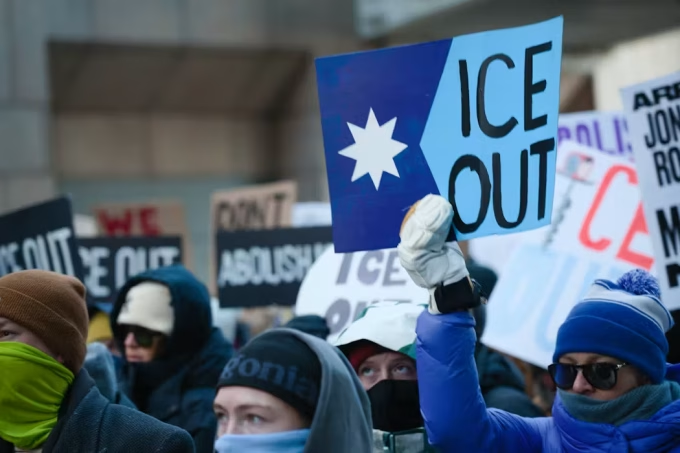
The recent protests in several cities weren’t just about political affiliation; they were about a growing sense of frustration. While the administration argues that increasing local taxes is the only way to avoid a national bankruptcy, the immediate effect is being felt in the most vulnerable places: the grocery stores and utility bills.
“They talk about the 2030 vision,” says a local small business owner, “but I’m worried about my electricity bill for March. It feels like the people making the rules have forgotten how much it costs to keep the lights on.”
A Crisis of Representation
The real political story of 2026 isn’t which party is leading in the polls—it’s the disconnect between the official narrative and the lived experience of the citizens. As local elections approach, the focus is shifting from grand ideologies to practical solutions for the cost-of-living crisis.