
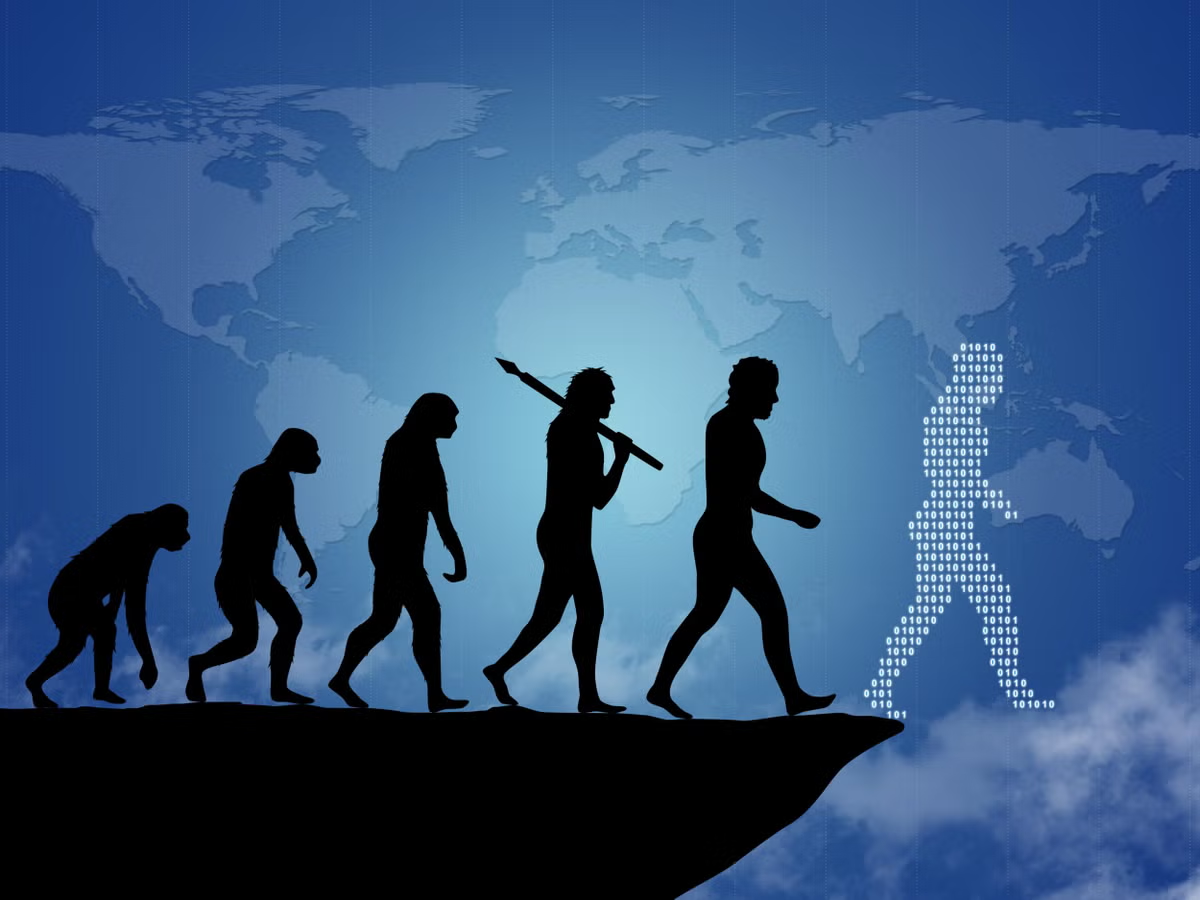

For centuries, humans have tended to see themselves as evolution’s ultimate achievement. Other species are often described as “primitive,” “ancient,” or “lower,” reinforcing the idea that evolution is a ladder with humanity at the top.
That view was visually cemented in 1866, when German biologist Ernst Haeckel drew one of the first evolutionary trees and placed “Man” at the very top. The illustration helped shape a long-lasting belief that evolution progresses upward toward a final goal — us.
Modern evolutionary biology, however, tells a very different story.
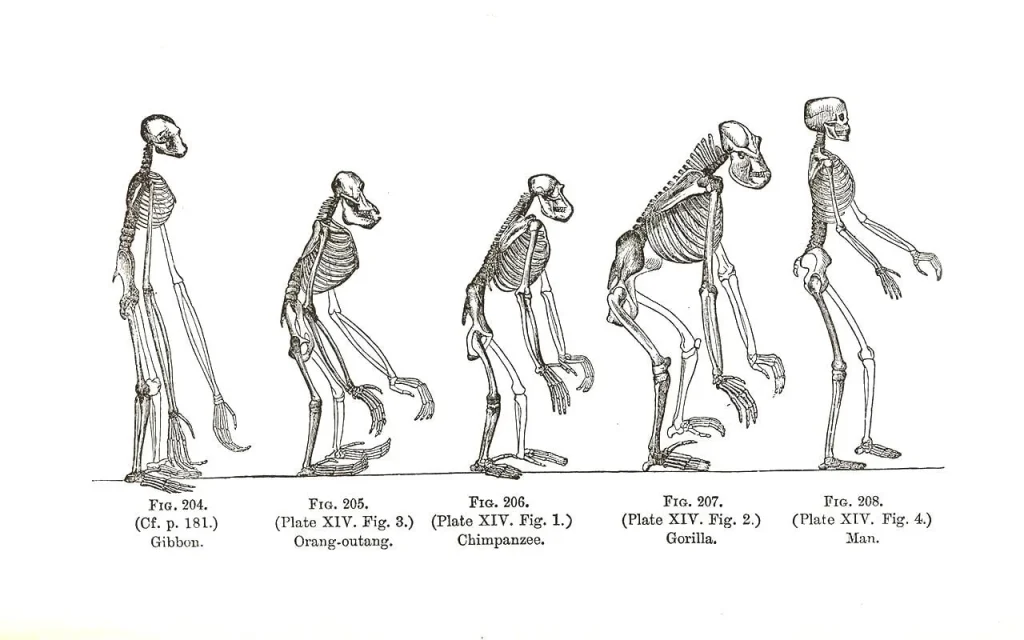
Today’s research in genomics and evolutionary science shows that evolution has no hierarchy. All living species — from humans and chimpanzees to bacteria — share equally long evolutionary histories. No species alive today is the ancestor of another; instead, we are all distant cousins branching from shared origins.
Not Primitive — Just Adapted Differently
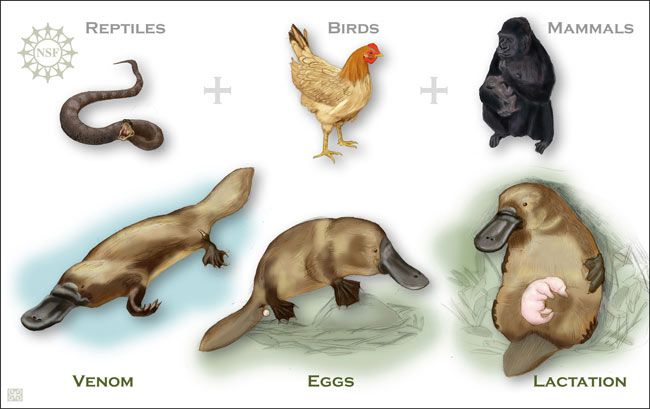
Some animals are still commonly labeled as “primitive,” especially egg-laying mammals known as monotremes, such as the platypus and echidnas. Because they lay eggs, a trait shared with reptiles, they are often portrayed as relics of the past.
But that description misses the bigger picture.
The platypus, for example, has highly specialized features: webbed feet for swimming, a bill equipped with electroreceptors that detect prey underwater, and venomous spurs used in defense. These are not primitive traits — they are sophisticated adaptations tailored to a specific ecological niche.
Echidnas, too, are sometimes viewed as basic compared with placental mammals. Yet they possess protective spines, powerful digging claws, and long sticky tongues perfectly designed for feeding on ants and termites. In their environment, they are exceptionally well adapted.
The same misunderstanding applies to marsupials such as kangaroos, koalas and wombats. Because they give birth to underdeveloped young that continue growing in a pouch, their reproductive strategy is often seen as inferior. In reality, this system offers flexibility and survival advantages in certain environments.
Rethinking the Evolutionary Tree
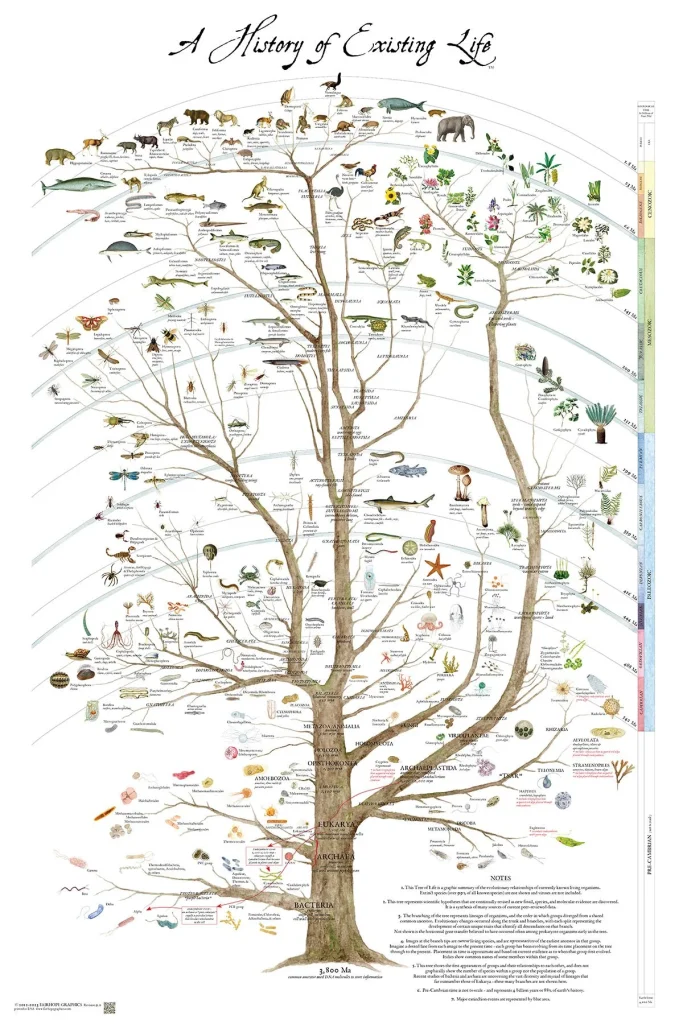
Misconceptions also arise from how evolutionary trees — known as phylogenies — are presented. Species such as marsupials or monotremes are often drawn at the bottom or to the side of diagrams, which can give the impression that they are more ancient or less evolved.
But evolutionary trees do not represent ladders. They illustrate relationships — like family trees. Being shown on a lower branch does not mean a species is “lower” in evolutionary status, just as your cousin is not more primitive than you.
The placement of species often depends on the focus of the study. If scientists are examining placental mammals, they may include one or two marsupials for comparison. In a study focused on marsupials, humans might instead appear on a lower branch for context.
Why This Matters
Viewing humans as the goal of evolution distorts our understanding of biology. Evolution has no endpoint and no built-in hierarchy. It is a branching, adaptive process shaped by environmental pressures.
This perspective is not just philosophical — it has practical implications. For instance, rhesus monkeys are often used in vaccine research because they are genetically closer to humans than other primates. Meanwhile, species that are more distantly related, such as opossums, can offer valuable insights precisely because of those evolutionary differences.
Understanding the tree of life correctly is fundamental across biology — from conservation to medicine.
Recognizing that humans are one branch among many, not the summit of a biological pyramid, allows for a clearer and more accurate view of evolution. Every living species today is equally modern, equally evolved, and uniquely adapted to its own ecological role.